
Golf Is Not a Performance Test
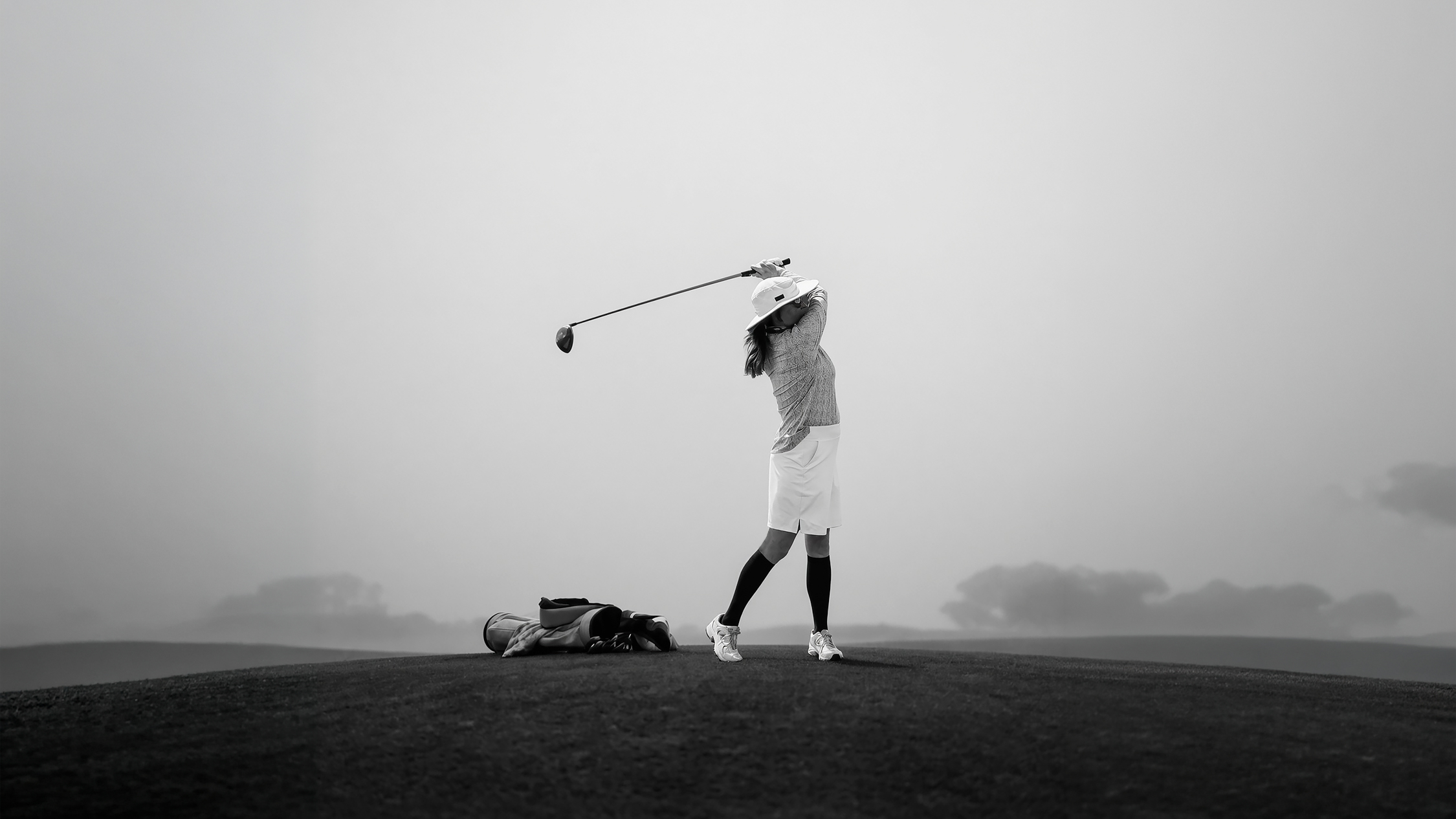
There is a particular kind of walk I have come to love in golf. You have hit your shot, put the club back in the bag and started toward the ball. Maybe you are carrying. Maybe you are pushing a cart. Your playing partners are scattered across the fairway, each headed toward whatever problem they have created for themselves. For a minute or two, there isn’t anything to do.
No swing thought. No yardage to calculate. No score to enter. You just walk.
I don’t think I appreciated that part of golf enough when I started playing seriously. I was too busy trying to get better.
There is an enormous amount of information available to anyone who wants to improve at golf, and I have consumed my share of it. Launch monitors can tell us things about a golf ball that I didn’t know existed a few years ago. We can measure club path, face angle, spin rate, attack angle and carry distance. Our watches know how far we walked, where we hit the ball and, increasingly, what that shot did to our strokes-gained numbers. Handicap systems update constantly.
Golf instruction follows us around on our phones.
Most of this is useful. Some of it is fascinating. And I still want to become a much better golfer.
But somewhere along the way, I began wondering whether becoming better at golf and becoming a player are exactly the same thing.
I’m increasingly convinced they aren’t.
A Different Measure of the Game
Golf is unusually susceptible to measurement because almost everything eventually becomes a number. The scorecard may be the most obvious example, but it hardly stops there. There is a handicap attached to us, a yardage attached to every club and a number beside almost every hole telling us what a good player ought to accomplish there.
It can become difficult not to treat the whole thing as a test.
I know that feeling well. A good round can make the drive home seem shorter. A bad one has occasionally followed me much farther than it deserved to. There have been stretches when I could hit the ball beautifully on the range and then spend the first few holes wondering where that golfer went. There have also been rounds when almost everything worked, and for a few hours the game seemed remarkably simple.
Neither lasts.
Golf has a wonderful way of taking whatever conclusion you’ve reached about your game and presenting contrary evidence a day later.
Perhaps that is why I have started paying more attention to everything happening around the score.
I like walking the course now. I like carrying a golf bag when temperatures make sense. There is something about moving through a golf course at the pace at which it was designed to be experienced. You notice where the ground rises. You see an angle from the fairway that isn’t quite as obvious from a cart path. You discover that a bunker you thought was sitting beside the green is actually well short of it.
You have time to look backward occasionally, which is one of the easiest ways to discover that a familiar golf hole is prettier than you realized.
I like dressing for golf, too. There’s a saying I love repeating “ The secret to good golf starts in the closet”.
Not because I think everyone needs to dress the same way or because golf needs another person enforcing unwritten rules. I simply like the ritual of it. Choosing what to wear is part of preparing to play. Cleaning the shoes matters. So does putting the bag together. There is a small amount of ceremony involved, and I have come to appreciate ceremony more than I once did.
It says: This matters to me.
Not terribly. Not solemnly.
Just enough.
The Things We Remember
One of the strange things about golf is how quickly scores disappear.
I can tell you the score from some rounds I’ve played, particularly the good ones, but the memories that stay with me aren’t organized neatly around the card.
I remember the sun setting directly in front of the ninth hole during Tuesday night league and making it almost painful to look up after hitting the ball. I remember ridiculous putts going in. I remember Terry and me playing matches that became far more competitive than two grown men probably needed them to be. I remember the conversations that happened while walking to the next tee.
I remember shots, certainly. Every golfer does.
But the older the round becomes, the less important the math seems.
That doesn’t mean competition is unimportant. Quite the opposite. Competition is one of the things I love about golf. Put a small amount of money on a match and suddenly a four-footer on the sixth green acquires a significance wildly disproportionate to its actual importance in the universe. That is part of the fun.
Trying to improve is part of the fun, too.
The danger, I think, is allowing improvement to become the condition under which we’re permitted to enjoy ourselves.
Golf doesn’t make that bargain with us.
You can practice all week and play terribly on Friday. You can feel completely lost for six holes and then hit the best iron shot you’ve hit all month. A 15-handicap can beat a 5. A ball can strike the flagstick and disappear into the cup or strike the same flagstick and ricochet across a green.
What do you do with that?
Increasingly, my answer is pretty simple.
Hit the shot. Accept what happened. Keep moving.
I wish I were as good at that as the sentence makes me sound.
A Larger Golf Life
There are signs that plenty of golfers are looking for something beyond performance, too.
The Golfer’s Journal has built much of its identity around the parts of golf that don’t fit particularly well on a leaderboard: people, places, architecture, travel, photography, history and stories that happen to have golf running through them. Its Broken Tee Society extends that idea into a community built around events and shared experiences surrounding a love of the game.
That distinction interests me.
It isn’t anti-technology or anti-improvement. It isn’t nostalgia for some supposedly purer version of golf. It is simply an acknowledgment that there is a larger golf life available to us.
And clubs have an enormous role in determining whether golfers discover it.
A club can be a place where members consume golf. Tee time. Cart. Eighteen holes. Score posted. Home.
Or it can become something more difficult to quantify.
It can be the place where someone teaches you the regular game on Friday afternoon. Where an older member explains why a hole should be played from the left side even though the right side looks safer from the tee. Where you learn that walking isn’t merely exercise but another way of seeing the course. Where Tuesday night league becomes part competition, part ritual and part excuse to spend an evening with people you probably wouldn’t have known otherwise.
The best of that happens organically. You can’t program all of it into a member-engagement calendar.
But clubs can create conditions in which it happens.
They can celebrate the architecture of their course instead of treating it merely as an amenity. They can make walking feel natural. They can create games that mix generations and ability levels. They can preserve traditions without becoming trapped by them. They can introduce new golfers to club culture without making them feel as though everyone else received a rulebook they somehow missed.
Most importantly, perhaps, they can remember that a golfer’s relationship with a club is built through hundreds of seemingly insignificant moments.
The walk from a green to the next tee matters.
So does the person walking beside you.
Golf, Considered
I have spent a fair amount of time lately thinking about what kind of golfer I want to become.
The obvious answer is a better one.
I’d like the handicap to keep coming down. I’d like to hit more greens, make more putts and become the kind of player who can stand over a shot when something matters and know exactly what he’s trying to do.
I’m going to keep working at that.
But I don’t want to become so interested in becoming a better golfer that I miss becoming something else along the way.
A golfer who walks when he can. Who notices the golf course instead of simply navigating it. Who dresses with some intention because playing golf still feels like an occasion. Who enjoys the people he’s playing with. Who competes hard and then leaves the match where it belongs. Who can hit a terrible shot without allowing it to ruin the next three.
And maybe someone who occasionally stops long enough to appreciate the absurd good fortune of having a beautiful golf course to walk around on for an afternoon.
There are worse ways to spend a life.
And certainly worse ways to play golf.
Until Next Time,
Markus