

At Cobble Creek’s thirteenth, familiarity changes both the way I play and what I see.
The Cimarrons are what catch my eye on the thirteenth at Cobble Creek. As I walk down the fairway, the perspective shifts just enough that the mountains keep offering another reason to look up. I think it’s the prettiest hole on the course, which is a mildly ridiculous thing to say about a long par 5 that has six bunkers and an irrigation ditch running down the left side like a reminder that water has opinions.
There’s plenty to admire and plenty to get wrong. Over time I’ve learned more about both, usually the hard way.
The hole turns left, and the tee shot matters more than it has any right to. For my game, finding the fairway is what gives me an actual chance at par or better. A long drive is useful only if it finishes somewhere I can still play the next shot. On 13 there are several ways for extra distance to become a problem.
When I was playing the combo tees regularly, I could hit the ball far enough through the dogleg to reach the deep grass and brush that waits out there. The drive would have plenty of length and leave me almost nothing to work with. The hole wants a particular kind of tee shot, and simply adding yards does not improve the answer. It just changes which trouble you meet first.
Moving back to the copper tees gave the ball more room to run out before that trouble arrived. There’s something quietly satisfying about discovering that the longer version of a hole can suit your game better. The extra distance doesn’t make the fairway any wider, but it gives my drive a little more space before the deep stuff. I still have to find the fairway. I just have slightly more room to do it.
That’s the sort of understanding that keeps a familiar course interesting. You start to recognize how its distances and angles relate to the shots you actually hit, not the ones you wish you hit. A hole that looks straightforward on the card becomes much more specific once you’ve played it enough times to know where your ball tends to finish and what that finish costs you.
On 13 the next decision depends on which side of the fairway I’ve found and how far I’ve hit it. From the right, at the right distance, I can see the pin. A shot of 230 or 240 yards might reach the green. But getting there and staying there are separate questions. The green is heavily protected by bunkers, and a ball arriving from that far is unlikely to hold it. It could bounce through or find one of the bunkers waiting around the green.
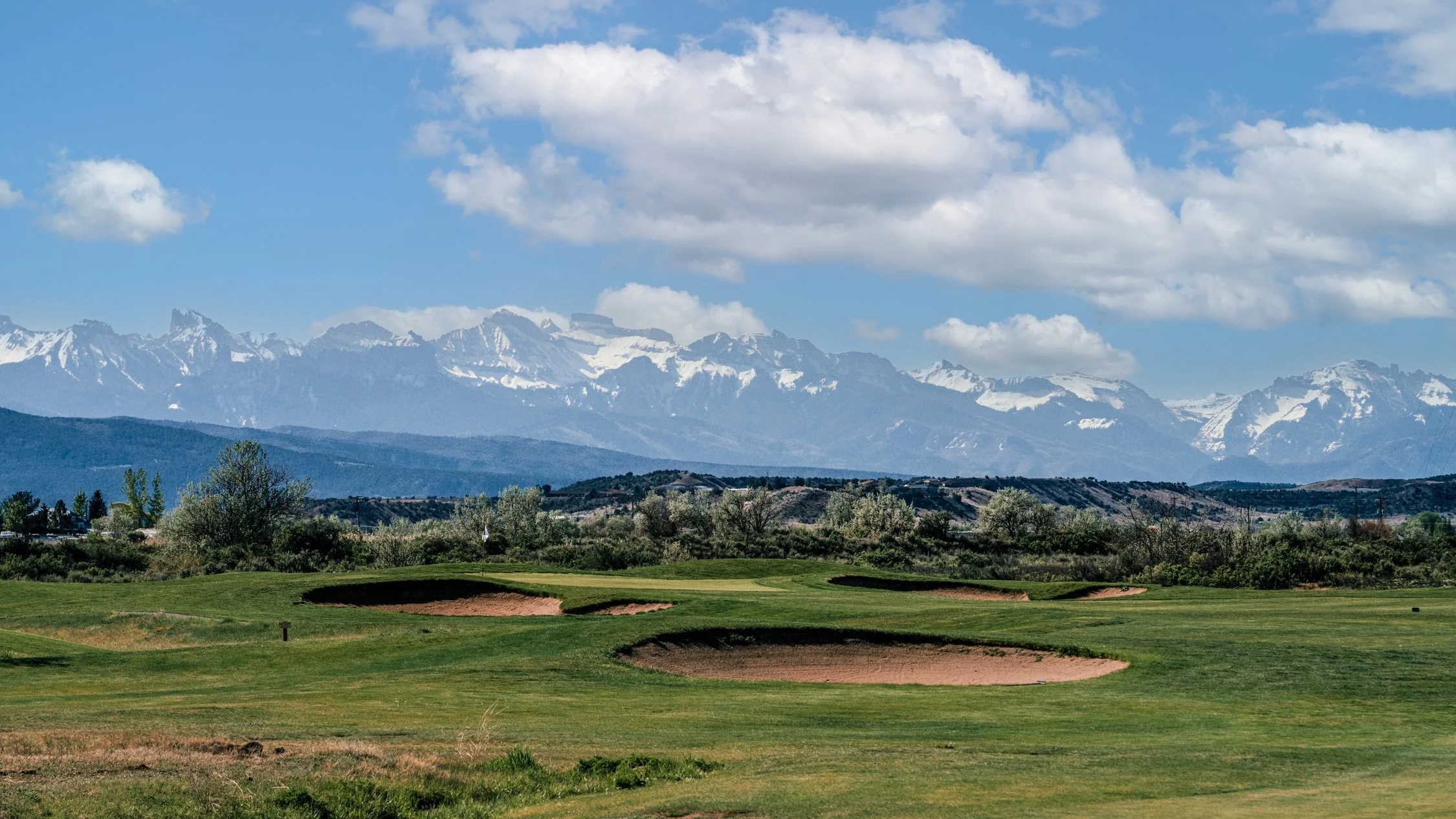
The thirteenth at Cobble Creek in spring, with the Cimarrons beyond.
So I think about the approach I’d rather have. For the way I play, that’s somewhere between 80 and 120 yards. I want a wedge in my hands, a shot I can hit with enough height and enough control that it has a reasonable chance of stopping when it lands. The second shot becomes a way of leaving myself that opportunity instead of hoping the green will cooperate with a longer club.
There’s a particular satisfaction in seeing a hole as that sequence. The drive gives me a place to play from. The second shot gives me a distance I like. Then I have a chance to reach the green in regulation and putt for birdie. Each shot has its own job, and familiarity has helped me understand how they fit together.
Knowing what I want to do does not make the execution certain. The fairway still has to be found, the second shot still has to finish in a useful place, and the wedge still has to be hit. But I like having a clear idea of what I’m trying to accomplish. The hole has become more understandable without becoming easy.
That’s part of the pleasure of returning to the same course. There’s enough familiarity to make a plan, and enough left to do that the plan still holds your attention. I can know 13 reasonably well and still have three shots ahead of me that require care.
The mountains are still there when I look up.
They are part of what makes me want to lift my eyes from the problem immediately in front of me. Walking down the fairway changes the view the same way it changes the shot. The hole gives me a reason to consider the ground carefully and a reason to look past it. Both belong to the experience of playing there.
When I call 13 the prettiest hole at Cobble Creek, I know how much trouble comes with it. I know about the runout, the brush, the ditch, and the bunkers. I also know the approach I’d rather leave myself, and why moving back a tee gives me room I appreciate.
Those details have become part of my affection for the hole. I enjoy its beauty with a fuller understanding of what it asks. There is pleasure in coming back, recognizing the choices, and having another chance to play them well.
Somewhere between the copper tees and that last wedge, the Cimarrons will catch my eye again. They always do.
Until Next Time,
MVM
There’s more to the game.
Original golf essays, photographs and field notes from Markus Van Meter. Free by email.